🌭 Is Slimy Sausage a Sign of Spoilage? Is It Still Safe to Eat?
Many people have encountered sausages or processed meat products that become slimy on the surface, even when stored in the refrigerator. This often raises the question:
Is it still safe to consume, or has it already spoiled?
The answer is: Sliminess is one of the early warning signs of spoilage, mainly caused by a group of microorganisms known as Specific Spoilage Organisms (SSOs).
✅ What Causes Sliminess on Sausages?
Even under refrigerated conditions, certain bacteria can still grow. SSOs are able to produce biological substances called
Exopolysaccharides (EPS), which form a slimy, sticky layer on the product surface.
Common SSOs found in sausages and processed meat include:
- Pseudomonas spp. – The main culprit responsible for slimy texture and unpleasant odor
- Brochothrix thermosphacta – Causes off-odors
- Weissella viridescens (LAB group) – Produces sour flavor and alters texture
👉 Pseudomonas, in particular, produces EPS that leads to the characteristic slippery and sticky surface, which is a key indicator of early spoilage.
✅ Factors That Accelerate Sliminess
- High moisture accumulation
- Improperly sealed packaging allowing air exposure
- Fluctuating refrigeration temperatures
✅ When Does Sausage Start to Spoil?
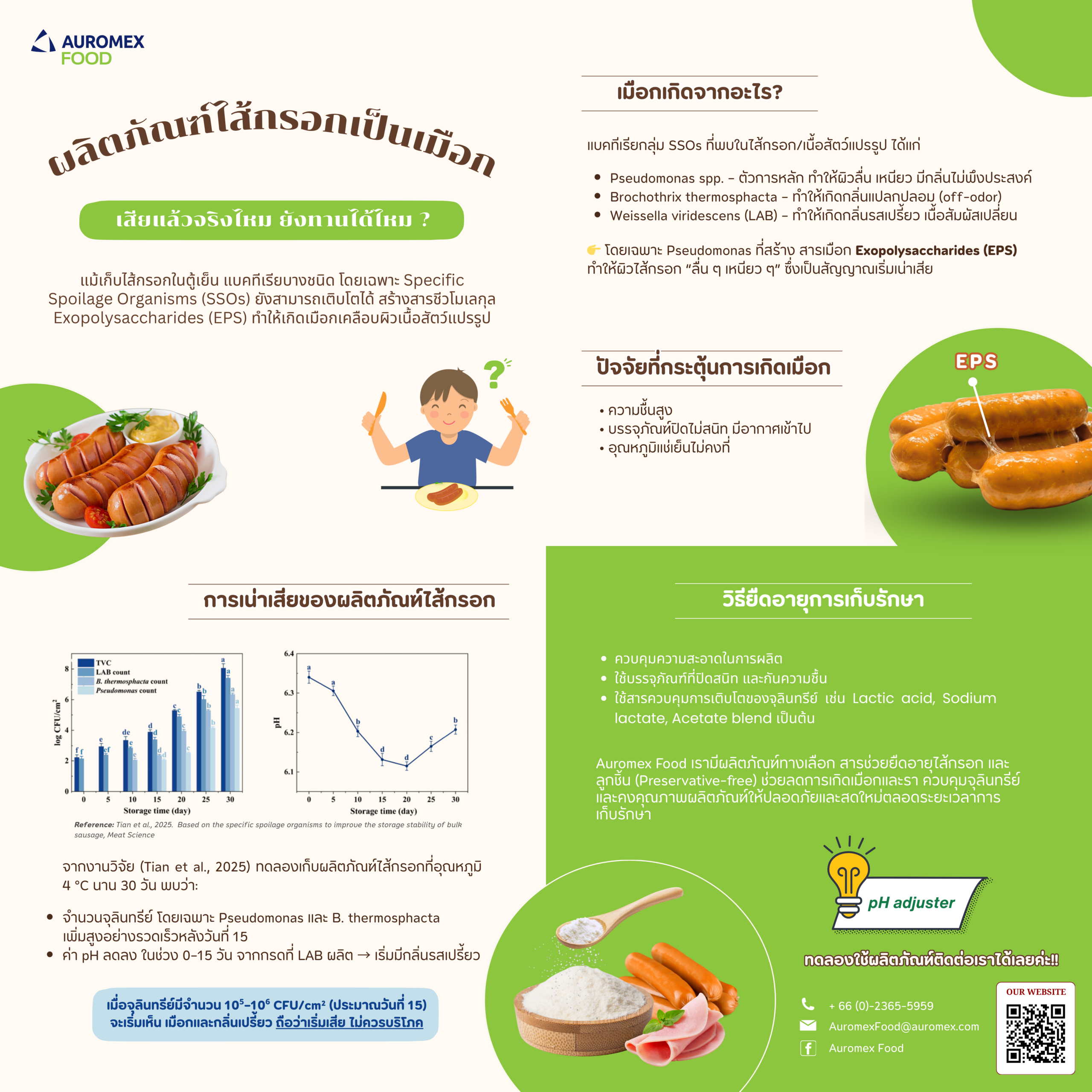
A storage study at 4°C for 30 days reported that:
- Pseudomonas and B. thermosphacta populations increased rapidly after Day 15
- pH decreased during Days 0–15 due to acid production by LAB, causing sour odor and flavor
- When microbial counts reached 10⁵–10⁶ CFU/cm² (around Day 15)
👉 Visible slime and sour odor appeared
👉 The product was considered spoiled and unsafe for consumption
✅ How to Extend Shelf Life and Prevent Sliminess
- Maintain strict hygiene during production
- Use airtight, moisture-resistant packaging
- Control temperature throughout transportation and storage
- Apply microbial growth control agents such as
Lactic acid, Sodium lactate, and Acetate blends
For food manufacturers,
Auromex Food offers preservative-free shelf-life extension solutions for sausages and meatballs, helping to reduce sliminess and mold growth, control microbial activity, and maintain product freshness throughout storage.