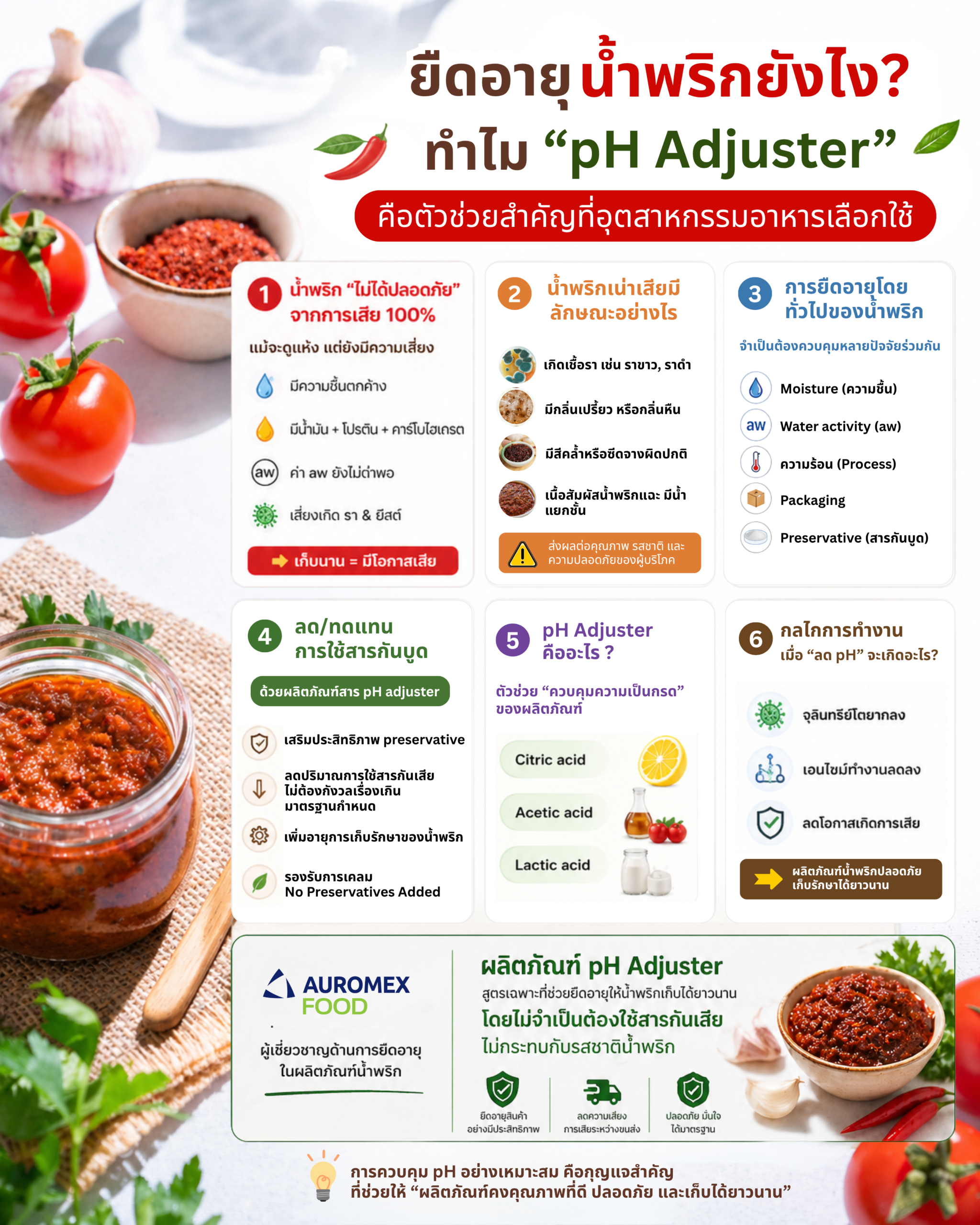
How to Extend Shelf Life of Chili Paste: Why pH Adjusters Matter
Dry Chili Paste Is Not Always Safe
Many manufacturers assume that dry chili paste has low spoilage risk.
However, in reality, it still contains risk factors such as:
- Residual moisture
- Water activity (aw)
- Fat and protein as microbial nutrients
- Contamination during processing
These factors can lead to mold growth, yeast, and product deterioration.
Signs of Spoiled Chili Paste
- Mold or unusual spots
- Rancid or sour odor
- Color changes
- Oil separation
These issues affect both product quality and consumer safety.
Key Factors in Shelf Life Extension
To effectively extend shelf life, multiple parameters must be controlled:
- Moisture
- Water activity (aw)
- Processing conditions
- Packaging
- Preservatives
What Is a pH Adjuster?
A pH Adjuster is an ingredient used to control acidity levels in food products.
Common examples include:
- Citric acid
- Acetic acid
- Lactic acid
Lowering pH helps to:
- Inhibit microbial growth
- Reduce enzymatic activity
- Improve product stability
Benefits of Using pH Adjusters in Chili Paste
✔ Enhances preservative effectiveness
✔ Reduces the need for preservatives
✔ Extends shelf life
✔ Supports No Preservatives Added trends
✔ Maintains product taste when properly used
Controlling pH is a key strategy in extending the shelf life of chili paste.
For manufacturers aiming to achieve quality, safety, and longer shelf life, pH adjusters provide an effective and reliable solution.