Why Can Minced Meat Bind Together into a Solid Structure?
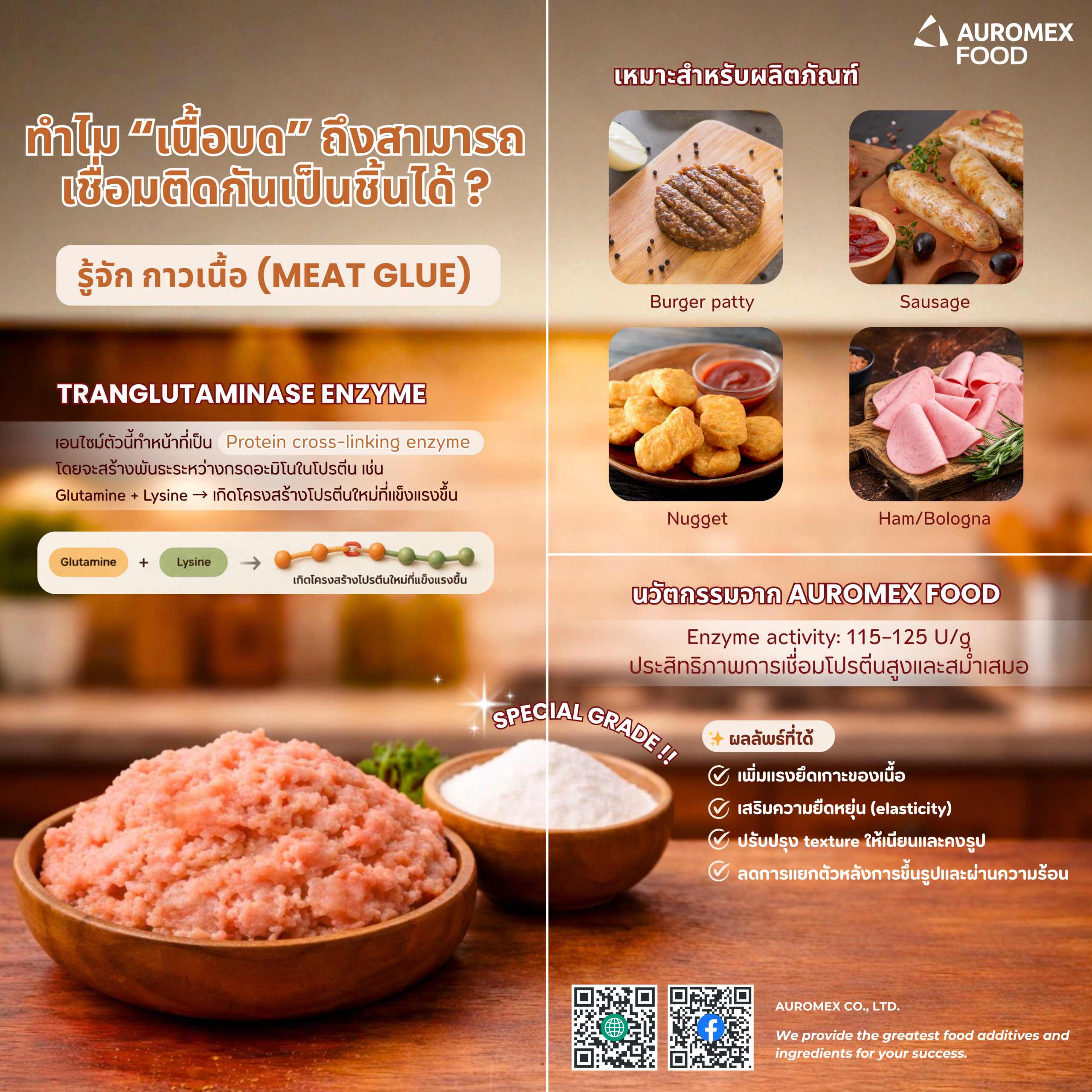
In processed meat products such as burgers, sausages, nuggets, and ham—classified as restructured meat products—the original muscle structure is disrupted during grinding. Despite this, the final products can still form a firm, cohesive structure.
This is primarily due to the use of Transglutaminase (TG), commonly known as “meat glue.”
What is Transglutaminase?
Transglutaminase is a protein cross-linking enzyme that catalyzes the formation of covalent bonds between amino acids in proteins, particularly:
- Glutamine
- Lysine
This reaction results in a stronger, interconnected protein network.
Mechanism of Action
TG facilitates the formation of cross-links between meat proteins, enabling dispersed protein fragments (after grinding) to recombine into a stable three-dimensional structure. This allows the meat to bind together without relying on its original muscle integrity.
Benefits in Meat Products
The application of Transglutaminase provides several functional benefits:
- Improved binding strength
- Enhanced texture (firmness and smoothness)
- Increased elasticity
- Reduced crumbling or separation after cooking
- Better shape retention and uniformity
Selecting the Right TG for Application
High-quality Transglutaminase with appropriate enzyme activity (e.g., 115–125 U/g) ensures consistent protein cross-linking performance, making it suitable for a wide range of restructured meat applications.
Transglutaminase plays a crucial role in the modern meat processing industry by improving product structure, texture, and stability. Its proper application can significantly enhance product value and market differentiation.
📩 For product development or formulation support, the Auromex Food team is ready to provide tailored solutions to meet your specific needs.