How to Extend the Shelf Life of Ready-to-Cook Mookata
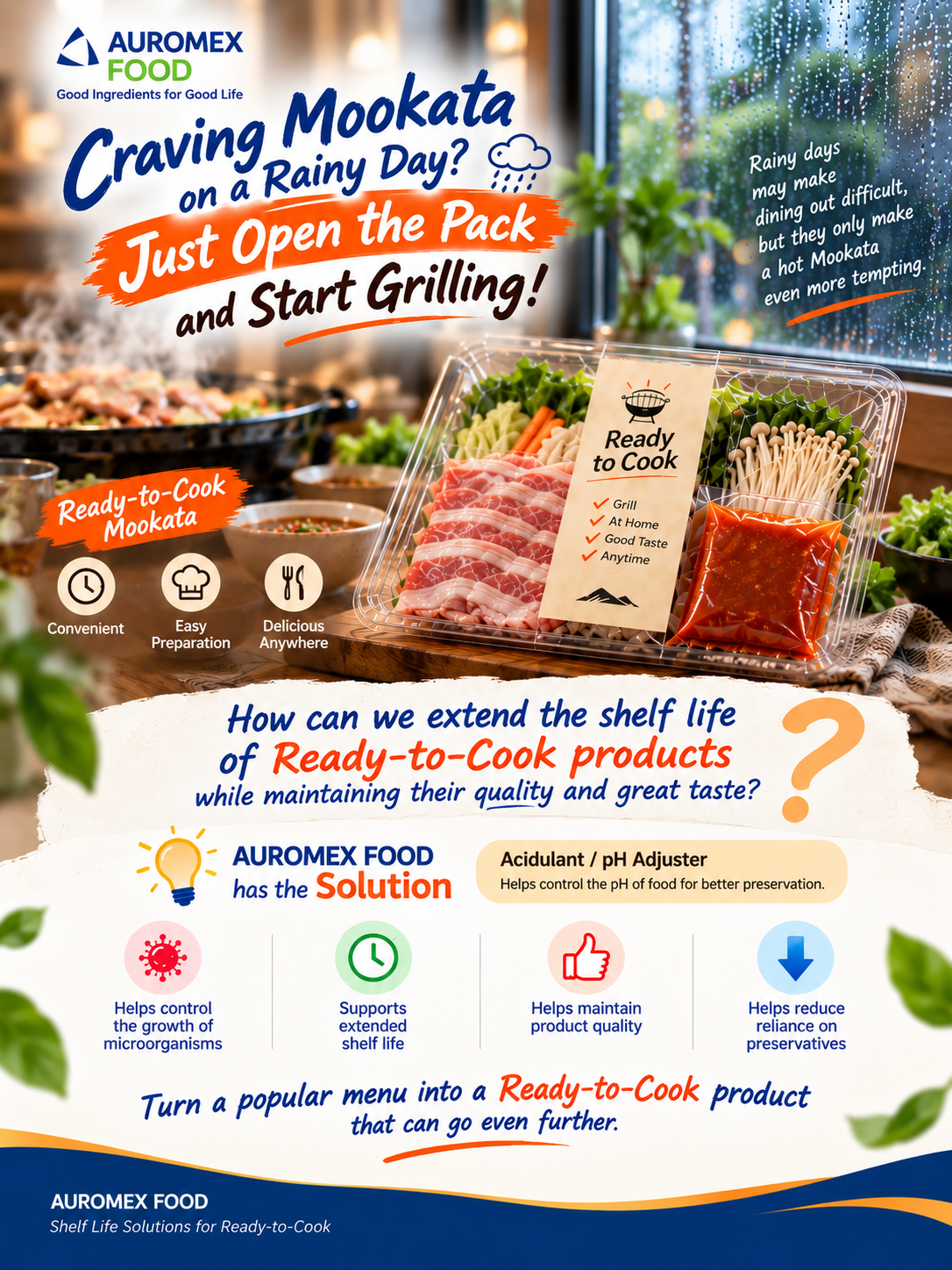
Craving Mookata on a Rainy Day? Just Open the Pack and Start Grilling!
Rainy days may make dining out less convenient, but the cool weather can make a hot and sizzling Mookata — Thai BBQ — even more tempting.
This creates an opportunity for Ready-to-Cook products that bring popular restaurant experiences directly into consumers’ homes.
With a Ready-to-Cook Mookata set in the refrigerator, consumers can simply open the pack, prepare the grill and enjoy their favorite meal at home. For food businesses, this concept can also transform a popular restaurant menu into a convenient product suitable for additional sales channels, including retail, modern trade and online delivery.
Convenience Is Important But So Is Shelf Life
Developing a Ready-to-Cook product involves more than preparing ingredients and placing them into convenient packaging.
Meat, sauces and other ingredients must maintain their desired quality throughout storage and distribution. Factors such as pH, water activity (aw), raw material quality, processing hygiene, packaging, storage temperature and cold-chain management can all influence product stability and shelf life.
Therefore, the key question is not simply:
“How can we make the product last longer?”
A better question is:
“How can we design an appropriate preservation system while maintaining product quality, taste and safety throughout its intended shelf life?”
How Can Acidulants and pH Adjusters Support Ready-to-Cook Products?
One approach used in food formulation is controlling product pH through the appropriate use of acidulants and pH adjusters.
Creating an appropriate pH environment can help make conditions less favorable for the growth of certain microorganisms. When combined with suitable processing, packaging and temperature control, pH management can become part of an overall strategy to support product shelf life.
For Ready-to-Cook Mookata and other food products, an appropriately designed pH-control system may help:
- Control the growth of certain microorganisms by creating a more appropriate pH environment.
- Support shelf-life extension when combined with suitable processing and storage conditions.
- Maintain consistent product quality throughout the intended storage period.
- Reduce reliance on preservatives through a more comprehensive preservation strategy.
Shelf-Life Extension Requires More Than One Solution
Shelf-life management should not rely on a single food additive.
An effective approach considers the product as a complete system, often referred to as a hurdle approach, in which several preservation factors work together.
Different Ready-to-Cook formulations can vary significantly in meat type, marinade, sauce composition, pH, water activity, processing conditions, packaging and storage temperature. Therefore, the most appropriate solution should be developed according to the characteristics of each individual product.
For Ready-to-Cook meat products in particular, the intended shelf life should also be validated through appropriate shelf-life studies and microbiological testing.
From a Popular Restaurant Menu to a Ready-to-Cook Opportunity
Mookata no longer has to be an experience enjoyed only at a restaurant.
With the right product development approach, a popular menu can be transformed into a convenient Ready-to-Cook product designed for today’s consumer lifestyle and expanded into new distribution channels.
Behind a successful Ready-to-Cook product, however, is more than great taste. An appropriately designed Shelf Life Solution can play an important role in maintaining quality and supporting commercial distribution.
AUROMEX FOOD provides ingredient and food additive solutions and works with food businesses to develop systems suited to the requirements of individual Ready-to-Cook products.